
Choosing a web development company means answering two questions at once, not one: which platform actually fits how your business will use the site, and which company can build and support it well. Get the platform wrong and even a great developer builds you the wrong tool. Get the company wrong and even the right platform gets built badly. Most businesses only think about the second question — this guide covers both.
In Pakistan specifically, this decision carries extra weight because most agencies pitch whatever platform they’re set up to build, not necessarily what fits your business. A WordPress shop will tell you WordPress is right for everything. A Shopify partner will steer every conversation toward Shopify. Knowing the actual trade-offs before that first call puts you in a much stronger position.
Start with the platform, not the company
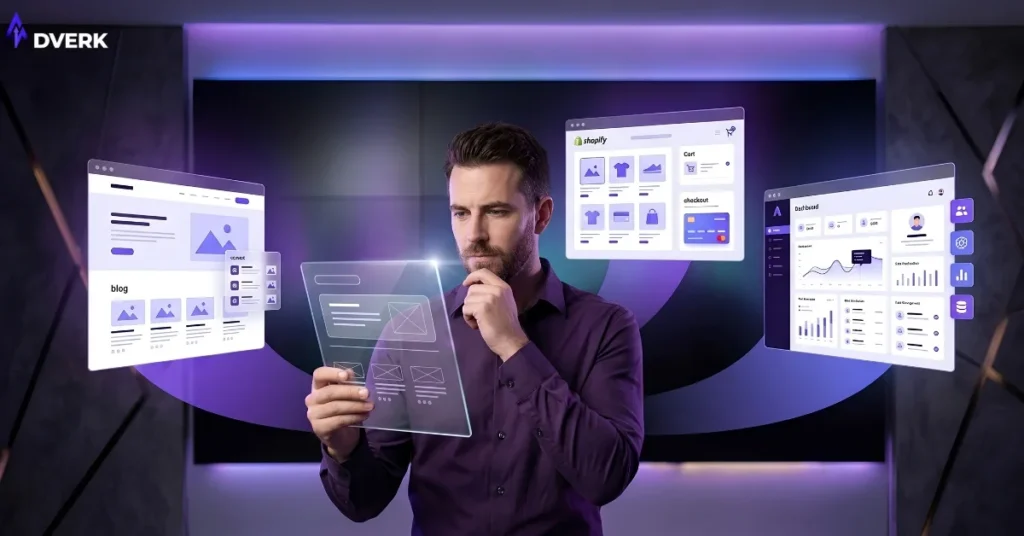
Before comparing agencies, get clear on what you actually need the website to do. That decision mostly narrows down to three paths: WordPress, Shopify, or custom development. Each is genuinely good — for different situations.
WordPress: the right fit for most service businesses and content-driven sites
WordPress makes sense when your site needs to be a flexible mix of pages, blog content, service descriptions, and lead-generation forms — the typical setup for agencies, clinics, consultants, real estate, education, and most B2B businesses. It’s cost-effective to build, easy to update once it’s set up properly, and has a plugin ecosystem that covers almost anything you’ll need (SEO, forms, booking, live chat). The trade-off is that WordPress is only as good as how it’s built: a site stacked with unnecessary plugins and a bloated page builder becomes slow and hard to maintain, which is exactly why so many WordPress redesign requests start with speed and reliability complaints.
Shopify: built specifically for selling products online
If the core function of your site is an online store — product catalog, cart, checkout, inventory, shipping, payment gateways — Shopify is purpose-built for that job in a way WordPress isn’t, even with WooCommerce added on. Checkout, security, and uptime are handled for you, and the app ecosystem covers most e-commerce needs without custom code. The trade-off is flexibility outside of commerce: if you also need a content-heavy blog, complex service pages, or highly custom functionality unrelated to selling products, Shopify starts to feel restrictive, and monthly subscription costs stack up as you add apps.
Custom development: worth it only when off-the-shelf genuinely can’t do the job
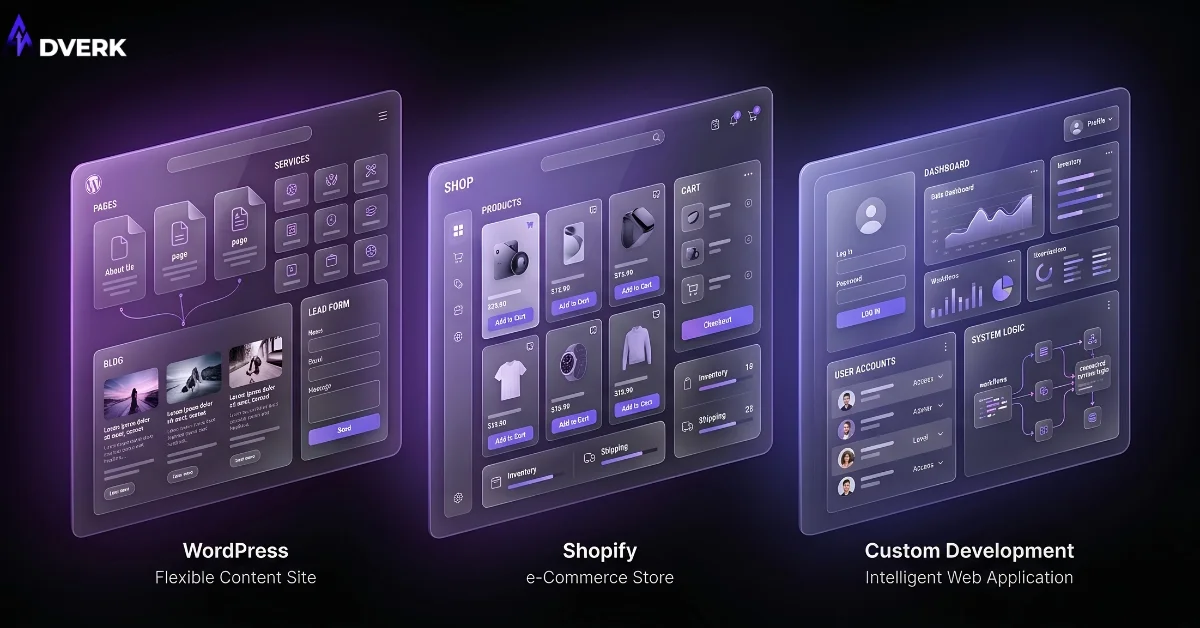
Custom-built websites make sense when your business has functionality that no CMS or e-commerce platform handles well out of the box — a booking system with complex logic, a portal with user accounts and permissions, an internal tool exposed to customers, or performance requirements a page-builder site can’t meet. It gives you full control over how the site works and scales, with no platform limitations. The cost is real: longer build time, higher upfront investment, and more responsibility for maintenance since you’re not relying on a large platform ecosystem to patch and support it. For most small and mid-sized businesses, custom development is unnecessary cost and complexity — it’s the right call for a specific minority of cases, not the default.
If you’re still unsure which of the three fits, that uncertainty is itself useful information for the next conversation: a development company worth hiring should be able to explain, in plain terms, which platform fits your actual goals and why — not just recommend whatever they build most often.
What actually separates a good web development company from the rest
Once you know roughly which platform direction makes sense, the company you choose determines whether that platform gets used well or wasted. A few things matter more than a polished portfolio page.
They ask about your business before talking about your website
A company that jumps straight into design mockups or a price quote without asking what the site needs to achieve — leads, sales, bookings, credibility — is optimizing for closing the deal, not for your outcome. The first real conversation should be about your business, your customers, and what “working” looks like for the site, before anyone talks templates or timelines.
Their portfolio shows real, working sites — not just screenshots
Ask to see live examples, not static mockups, and actually visit them on your phone. Check load speed, whether the design still holds up, and whether the site is structured in a way that matches the kind of business you run. A portfolio full of visually impressive screenshots that turn out to be slow or broken in production tells you more than the screenshots themselves do.
You own what gets built
Confirm upfront that you’ll own the domain, hosting account, and full source code once the project is delivered — not the agency, with you renting access. This matters more than it seems during the sales process: businesses that don’t clarify ownership sometimes find themselves unable to switch developers later without rebuilding from scratch.
They have an actual process, not just a price
A company that can walk you through their process — discovery, design review stages, development, testing, launch, and what happens after — is more likely to deliver predictably than one that only quotes a price and a delivery date. Vague timelines and no defined review checkpoints are usually where projects go sideways midway through.
Support doesn’t end at launch
Ask directly what happens after the site goes live: is there a support period, who fixes issues if something breaks, and what ongoing maintenance costs look like. A launched website that nobody is responsible for maintaining tends to degrade — outdated plugins, broken forms, expired SSL certificates — without anyone noticing until it costs you leads.
Questions worth asking before you sign
A few direct questions in that first conversation tend to reveal more than a proposal document will:
- Which platform do you recommend for my specific goals, and why that one over the alternatives?
- Will I own the domain, hosting, and code once the project is complete?
- What does your process look like from kickoff to launch, and where do I review progress along the way?
- What happens if I need changes after launch — is that included, or a separate cost?
- Can I see two or three live sites you’ve built for businesses similar to mine?
How clearly and honestly a company answers these — especially the ones about ownership and post-launch support — usually tells you more than anything in their pitch.
Red flags worth taking seriously
A few patterns are worth pausing on if you notice them during the sales process: pressure to decide immediately or lock in a discount that expires today, no willingness to explain why a particular platform fits your business, vague or shifting answers about who owns the final files, and portfolios that can’t be verified as live, working sites. None of these are automatically disqualifying on their own, but more than one together is a reason to keep looking.
Getting this decision right — platform and company together — is what determines whether your website becomes a working part of how the business grows, or another project that needed replacing two years in. Adverk’s web development services cover WordPress, Shopify, and custom builds, and the platform recommendation always starts with what the business actually needs, not what’s easiest to sell. If the site also needs design work alongside the build, our web design services handle that as part of the same process rather than a separate handoff.
Frequently Asked Questions
What if my project genuinely needs a mix of WordPress and e-commerce features?
WooCommerce on WordPress can cover lighter e-commerce needs alongside content-heavy pages, but if selling products is the core function of the site, Shopify’s purpose-built checkout and inventory handling is usually the stronger foundation. The right call depends on which function — content or commerce — is actually primary.
How do I know if a company is exaggerating their portfolio?
Ask to visit the live sites directly on your own phone rather than looking at screenshots, and check load speed and whether the design still holds up in production. A portfolio that only exists as static images, or sites that turn out to be slow or broken live, is a clear warning sign.
Is it normal to pay more for ongoing support after launch?
Yes — reasonable ongoing maintenance costs are normal, since websites need updates, security patches, and occasional fixes over time. What matters is getting clarity upfront on what’s included versus billed separately, not whether a cost exists at all.
Should I be worried if a company can’t explain why they recommend a specific platform?
Yes — a company that can’t explain, in plain terms, why a platform fits your specific goals is likely recommending whatever they’re set up to build rather than what’s actually right for your business. That’s one of the clearest signals worth taking seriously.
What’s the biggest mistake businesses make when choosing between WordPress, Shopify, and custom development?
Letting the agency’s preferred platform decide the answer instead of starting from what the business actually needs the site to do. The platform question should be settled based on your goals first — content-driven, commerce-driven, or something genuinely custom — before you’re comparing companies at all.
If you’re at the stage of comparing options, the fastest way to get a straight answer on which platform fits your business is to book a free consultation and walk through what you actually need before committing to either a platform or a company.