


If you’re building an online store in Pakistan, WordPress with WooCommerce is usually the better starting point — it costs less to run, gives you full control over local payment gateways, and doesn’t lock your content behind a subscription. Shopify is worth the extra cost when you want a fully managed platform and are prepared to work around the fact that Shopify Payments isn’t available here. The right answer still depends on your budget, your technical comfort, and how you plan to get paid.
Both platforms can run a serious e-commerce business. The difference is in what you’re trading off, and a few of those trade-offs look different in Pakistan than they do in the US or UK content most comparison guides are written for.
The Quick Answer
Choose WooCommerce (WordPress) if you want lower running costs, easier integration with local payment methods like JazzCash and Easypaisa, and you’re comfortable managing hosting and updates — or working with a developer who does.
Choose Shopify if you want a platform that handles security, uptime, and maintenance for you, you’re planning to scale into paid ads and app-based automation quickly, and you’re willing to route payments through a third-party gateway since Shopify’s own payment processor doesn’t operate in Pakistan yet.
Cost: What You Actually Pay
Shopify charges a recurring monthly fee for the platform itself, on top of whatever you spend on a theme, apps, and transaction fees from your payment gateway. WooCommerce is a free plugin, but “free” only covers the software — you still pay for hosting, a domain, an SSL certificate, and usually a handful of paid plugins (page builders, backup tools, SEO plugins) as the store grows.
In practice, a lean WooCommerce store tends to run cheaper month to month, especially in the first year. Shopify’s cost is more predictable and bundled, which some business owners prefer even if the total is higher, because there’s one bill instead of several.
Payment Gateways: The Part Most Comparisons Skip
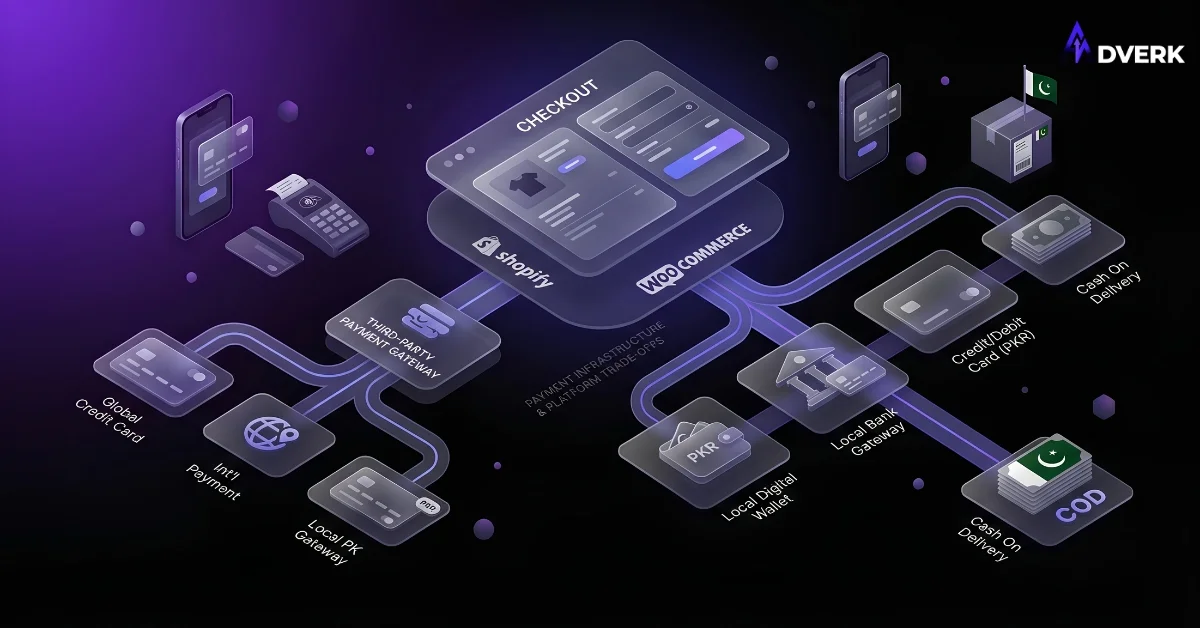
This is where the decision actually gets local. Shopify Payments — the built-in processor Shopify pushes hardest — is not available to merchants in Pakistan. That means every Shopify store here has to connect a third-party gateway instead, whether that’s a local bank’s payment gateway service, a fintech provider, or an international processor that supports Pakistani businesses.
WooCommerce doesn’t solve this for you automatically either, but because it’s self-hosted, it’s generally easier to plug in JazzCash, Easypaisa, or a local bank gateway directly, without working around a platform that was built for markets where its own payment processor is standard. Both platforms also support cash on delivery, which still matters in Pakistan — many first-time online buyers choose COD over any digital payment method, and both Shopify and WooCommerce handle that natively.
If your store will lean heavily on COD and local wallets rather than international cards, this is worth weighing before you pick a platform, not after you’ve already built the store.
Ease of Use and Ongoing Maintenance
Shopify is built to be usable without a developer. You sign up, pick a theme, add products, and you’re live — security patches, server uptime, and PCI compliance are handled by Shopify in the background.
WordPress and WooCommerce ask more of you. Someone needs to keep the CMS, theme, and plugins updated, manage hosting, and troubleshoot the occasional plugin conflict. That’s a real cost, but it’s also where the trade-off pays off: you get more control over exactly how the store looks and behaves, and you’re not limited to what Shopify’s app ecosystem allows.
If you don’t have in-house technical support and don’t want to hire a developer for ongoing maintenance, that alone can tip the decision toward Shopify.
SEO and Content Marketing
Both platforms can rank well — the platform itself is rarely the reason a store fails at SEO. But WordPress has a structural advantage for content-heavy strategies: it was built as a publishing platform first, so blogging, category structures, and internal linking are more flexible, and plugins give you granular control over technical SEO details.
Shopify’s SEO has improved significantly and covers the essentials well (clean URLs, sitemaps, meta fields), but some technical controls that WordPress exposes natively require workarounds or apps on Shopify. If SEO and content marketing are going to be a major part of how you plan to get customers — rather than relying mainly on paid ads or social — that leans toward WordPress.
Scalability
Shopify scales with almost no manual intervention on your part — traffic spikes during a sale are Shopify’s problem to handle, not yours. WooCommerce can scale to a large catalog and high traffic too, but it depends on your hosting: a shared hosting plan will struggle where a properly configured server won’t. Scaling WooCommerce is possible and common, but it takes planning rather than happening by default.
Design and Customization
WooCommerce, running on WordPress, gives you more room to build something that doesn’t look like every other store on the platform — themes, page builders, and custom development can produce a fully bespoke storefront. Shopify themes are polished and fast to launch with, but deep customization usually means hiring a Shopify developer to work within (or extend) the platform’s theme structure.
A Simple Way to Decide
A few quick scenarios where the choice tends to be clear:
- Small catalog, tight budget, comfortable working with a developer or agency for setup: WooCommerce usually costs less to run long-term.
- You want to launch fast with minimal ongoing technical involvement: Shopify removes most of the maintenance burden.
- Your business already has a WordPress site (blog, service pages) and you’re adding a store to it: WooCommerce keeps everything in one system instead of running two separate platforms.
- You expect to scale quickly into a large catalog with heavy traffic and don’t want to manage hosting: Shopify’s infrastructure is built for that out of the box.
- Content marketing and SEO are core to your growth plan: WordPress gives you more native control.
Neither platform is a wrong choice on its own — the mismatch happens when the platform doesn’t fit how the business actually plans to operate, sell, and get paid.
Common Questions
Can I switch from Shopify to WooCommerce (or the other way) later?
Yes, but migrating products, orders, and customer data between platforms takes real planning — it’s not a one-click move. It’s worth getting the choice right at the start rather than treating it as easily reversible.
Is Shopify actually usable in Pakistan if Shopify Payments isn’t available?
Yes. Pakistani merchants run Shopify stores by connecting a third-party or bank payment gateway instead of Shopify Payments, and by offering cash on delivery. It adds a setup step, but it doesn’t block you from using the platform.
Which platform is better for SEO specifically?
Both can rank. WordPress has more native flexibility for content-heavy SEO strategies; Shopify covers core technical SEO well but leans more on apps for advanced control.
Do I need a developer for either platform?
Not strictly for Shopify to launch a basic store. WooCommerce generally benefits from developer involvement for setup, hosting configuration, and ongoing maintenance, even if you manage day-to-day operations yourself afterward.
If you’re weighing this decision for a real launch and want it assessed against your specific budget, catalog size, and how you plan to get paid, Adverk’s web development team can walk through both options with you. You can also book a free consultation to talk through what fits your business before you commit to a platform.