
A logo is one visual mark. Brand identity is the full system that mark belongs to — the colors, typography, imagery style, and usage rules that keep your business looking like the same company everywhere it shows up. Most small businesses in Pakistan start by asking for “a logo” when what actually solves their problem is a brand identity, and the two get treated as interchangeable far more often than they should be.
This distinction matters because it changes what you’re actually ordering, how much work is involved, and whether the result fixes the problem you’re trying to solve. Here’s how they’re different, what each one includes, and how to tell which one your business needs right now.
What a Logo Actually Is
A logo is a single visual asset — a mark, wordmark, or combination of the two — designed to represent your business in the smallest possible space: a favicon, a social media profile photo, the corner of an invoice. A strong logo is distinctive, legible at small sizes, and scalable without losing detail. Our guide to logo design for small businesses covers what separates a logo that actually works from one that just looks nice in a large preview.
On its own, a logo answers one question: what does this business look like when reduced to a single icon? It doesn’t answer what color your Instagram posts should be, what font your invoices use, or how your business card should be laid out. That’s where brand identity comes in.
What Brand Identity Includes Beyond the Logo
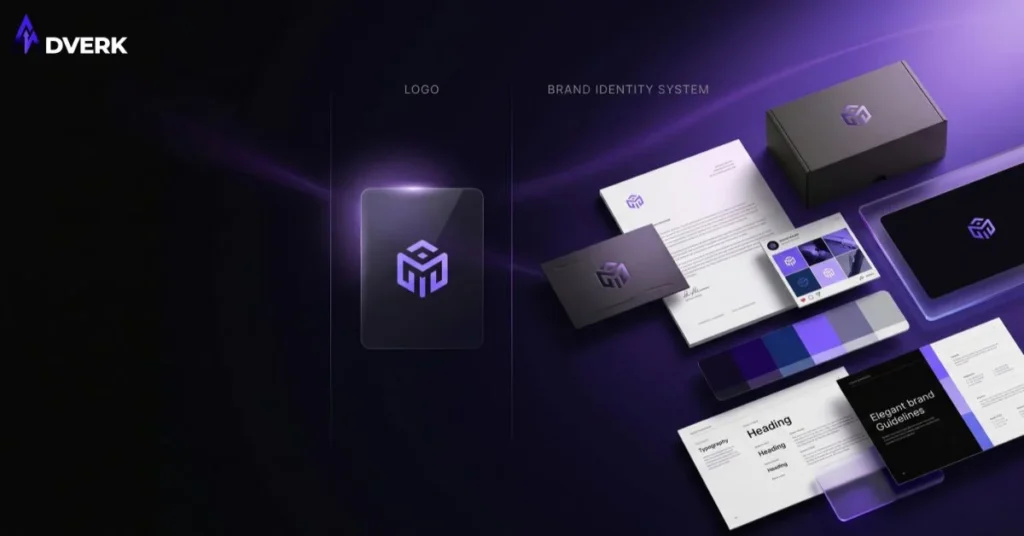
Brand identity is the complete visual system built around the logo. It typically covers:
- A color palette — primary and secondary brand colors used consistently across every platform, not picked fresh for each new design.
- Typography — the fonts used in headlines, body text, and marketing materials, chosen to match the brand’s tone.
- Logo usage rules — how the logo behaves on light and dark backgrounds, minimum sizing, clear space, and what not to do with it.
- Supporting visual style — the look and feel applied to social media templates, business cards, letterheads, brochures, and product visuals so they all read as the same brand.
None of these elements do much on their own. Their value comes from being used together, consistently, across every place a customer sees the business — which is the actual problem a logo alone can’t solve.
Why the Difference Actually Matters
The most common symptom of skipping brand identity is inconsistency: one social media post looks different from the next, the logo doesn’t match the brochure, product images look unprofessional next to a polished website, and business cards feel outdated compared to everything else. Each individual piece might look fine in isolation, but the brand as a whole feels unplanned.
That inconsistency has a real cost. Customers form trust partly through repetition and familiarity — a business that looks different every time they encounter it reads as smaller, less established, or less reliable than one that doesn’t, even if the underlying product or service is identical.
Signs You Only Need a Logo Right Now
A logo alone is usually enough when:
- You’re pre-launch or very early stage and need something to put on a storefront, invoice, or single social profile.
- Your budget genuinely only covers one deliverable and everything else can wait.
- You already have a working color and style direction (even informally) and just need the mark itself finalized.
In these cases, ordering a full brand identity is often premature — you’d be paying for consistency rules across touchpoints you don’t have yet.
Signs You Need a Full Brand Identity
A full brand identity becomes the right call when:
- You’re actively publishing across multiple platforms — social media, a website, print materials — and they don’t look related to each other.
- You’re onboarding other people (staff, freelancers, agencies) who need clear rules to design consistently without asking you every time.
- Your logo already exists and works, but everything built around it feels improvised.
- You’re scaling — opening new locations, launching new products, or entering new markets — where consistency starts to matter more than it did at a smaller size.
If you’re unsure which category your business falls into, our guide to choosing a graphic design agency in Pakistan walks through how to scope a project like this before you commit to either deliverable.
How Logo and Brand Identity Work Together
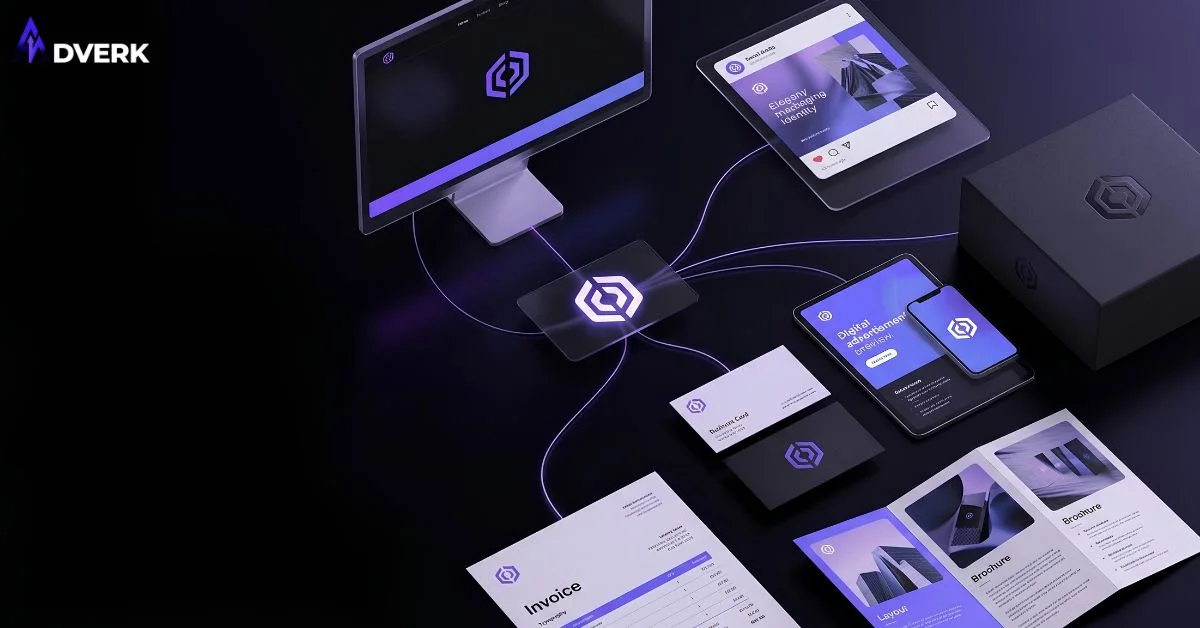
A logo isn’t replaced by a brand identity — it’s absorbed into it. The logo stays the anchor: the single mark that has to work at every size and in every context. Brand identity is what surrounds that anchor so a business card, a Facebook ad, and a product mockup all clearly belong to the same company without the customer having to think about why.
This is also why a brand identity project is not simply “logo design, but bigger.” It requires decisions a logo brief alone doesn’t force — how the brand looks in someone else’s hands, on a different platform, printed instead of digital, months or years after the initial design work is done.
What to Plan For
Logo design and brand identity work are scoped differently because they solve different problems, so the time and cost involved aren’t the same for both. Rather than quoting a fixed number that varies heavily by scope, revisions, and deliverables, it’s worth having a direct conversation about what your business actually needs before committing to either one. Adverk’s graphic design services cover both logo design and full brand identity work, with source files (PSD, AI, PDF, SVG) included either way.
Frequently Asked Questions
Do I need a brand identity if I just started my business?
Not necessarily right away. If you’re pre-launch or only need a mark for one or two touchpoints, a logo alone is usually enough to start with. A full brand identity becomes more valuable once you’re publishing consistently across multiple platforms and need everything to look connected.
Can I get a logo without a full brand identity?
Yes. Logo design and brand identity are separate deliverables, and many businesses order a logo first, then build out the rest of the identity system later once they know how and where they’ll be using it. There’s no requirement to buy both at once.
What’s included in a brand identity beyond the logo?
A typical brand identity includes a color palette, chosen typography, logo usage rules (sizing, spacing, backgrounds), and a consistent visual style applied to things like social media templates, business cards, and brochures. The exact scope depends on which touchpoints your business actually uses.
How much does a brand identity cost compared to just a logo?
Brand identity work generally costs more than a standalone logo because it covers more deliverables and more decisions about how those pieces work together. The actual cost depends heavily on scope, so it’s best confirmed through a direct quote rather than a general estimate.
Can my brand identity change without changing my logo?
Yes. Businesses often refresh their color palette, typography, or overall visual style while keeping the logo itself the same, especially if the logo is already recognized and working well. The identity system around a logo can evolve independently of the mark itself.
How long does building a full brand identity usually take?
It generally takes longer than a standalone logo project since it involves more deliverables and more rounds of feedback across different applications. Exact timelines depend on scope and how quickly feedback is turned around, so it’s worth confirming a timeline upfront before the project starts.
If you’re not sure whether your business needs a logo, a full brand identity, or both, book a free consultation and we’ll help you figure out the right scope before you spend on either one.