
A landing page is a single, focused page built to get a visitor to take one action — book a call, fill a form, or buy — and it converts better than a regular website page because it removes the navigation, links, and competing offers that let visitors wander off. If your Google Ads, social campaigns, or product launches are sending traffic to your homepage or a generic service page, that mismatch is very likely costing you leads before you even see the numbers.
This guide covers what actually makes a landing page convert, the mistakes that quietly kill results, and how to decide whether you need a dedicated landing page or just a better website page.
What Makes a Landing Page Different From a Website Page
A website page usually has to do several jobs at once — explain who you are, list your services, help people navigate to other pages, and support SEO. A landing page has exactly one job: convince the visitor who already clicked an ad or a link to complete one specific action.
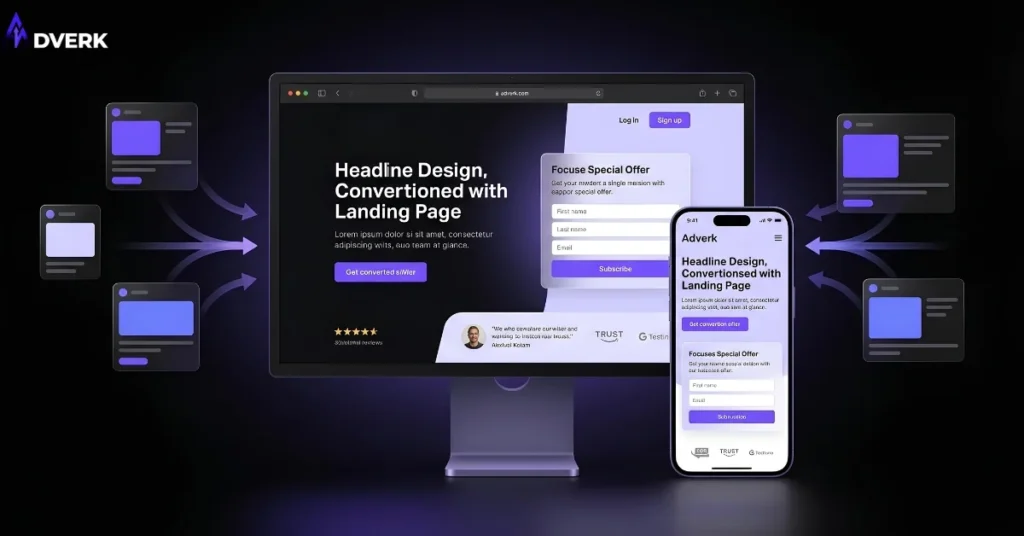
That single-purpose focus changes the design decisions. A landing page typically drops the main site navigation, limits outbound links, and repeats the same call to action multiple times down the page. A website page keeps navigation, links to related pages, and gives visitors room to explore. Neither is “better” — they solve different problems, which is why treating your homepage like a landing page (or vice versa) usually hurts performance on both fronts.
The Core Elements of a High-Converting Landing Page
Most landing pages that underperform are missing one or more of these basics, not some advanced trick.
A Headline That Matches the Ad or Link That Brought the Visitor
If someone clicks a Google Ad for “affordable web development in Karachi” and lands on a page headlined “Welcome to Our Agency,” you’ve already lost part of that traffic. The headline should restate the same promise the visitor just clicked on — this is usually called message match, and it’s one of the simplest ways to reduce bounce rate on paid traffic.
One Clear, Repeated Call to Action
A landing page should ask for one thing — not “Call us, email us, or fill this form, or check out our other services.” Pick the single action that matters most for that campaign and repeat the same button or form at the top, middle, and bottom of the page so visitors never have to scroll back up to convert.
Benefit-Led Copy, Not Feature Lists
Visitors don’t convert because you listed every feature — they convert because the page answered “what’s in it for me” quickly. Lead with the outcome (a faster website, more inquiries, a professional first impression) and use features to back up that claim, not replace it.
Trust Signals Above the Fold
Testimonials, client logos, review counts, or a portfolio link close the gap between “this sounds good” and “I trust this business enough to hand over my contact details.” Put at least one trust element where visitors can see it without scrolling, especially for cold traffic that has never heard of your brand before.
A Short, Low-Friction Form
Every extra field on a form is a reason for someone to abandon it. Ask for what you genuinely need to follow up — usually name, contact number or email, and a one-line note on what they need — and save the detailed questions for the actual sales conversation.
Fast Load Time and Mobile Responsiveness
Most paid traffic in Pakistan arrives on a phone, often on a mobile connection, not a desktop on fibre. A landing page that takes several seconds to load or renders badly on a small screen loses visitors before the message even has a chance to land, no matter how good the copy is.
Common Landing Page Mistakes That Kill Conversions
A few patterns show up again and again on landing pages that don’t convert:
- Keeping the full site navigation. Every menu link is an exit ramp away from the one action you actually want.
- Sending all campaigns to the same generic page. A Facebook ad, a Google Ad, and an email campaign usually have different intents — one page can’t message-match all three well.
- Burying the call to action below several scrolls of content. If someone is ready to act after the headline, make them wait for the CTA and some will simply leave.
- No mobile testing before launch. A page that looks fine on a laptop can have broken buttons or cut-off text on a phone.
- Treating the page as a one-time build. A landing page that never gets reviewed against real conversion data usually keeps underperforming quietly for months.
When You Actually Need a Dedicated Landing Page
Not every campaign needs a brand-new page. As a general guide, a dedicated landing page is worth building when:
- You’re running a Google Ads or social media ad campaign and want the message on the page to match the ad exactly.
- You’re launching a specific product, service, or promotional offer that doesn’t have its own home on the main site yet.
- You’re running a lead-generation push and need a form-focused page without the distraction of full site navigation.
- You’re testing a new offer or price point and want to measure it separately from your main site’s traffic and conversions.
If none of those apply and you’re simply trying to make your existing website clearer and easier to navigate, a full or partial website redesign is usually the more useful investment than a standalone landing page.
What Affects the Cost of a Landing Page
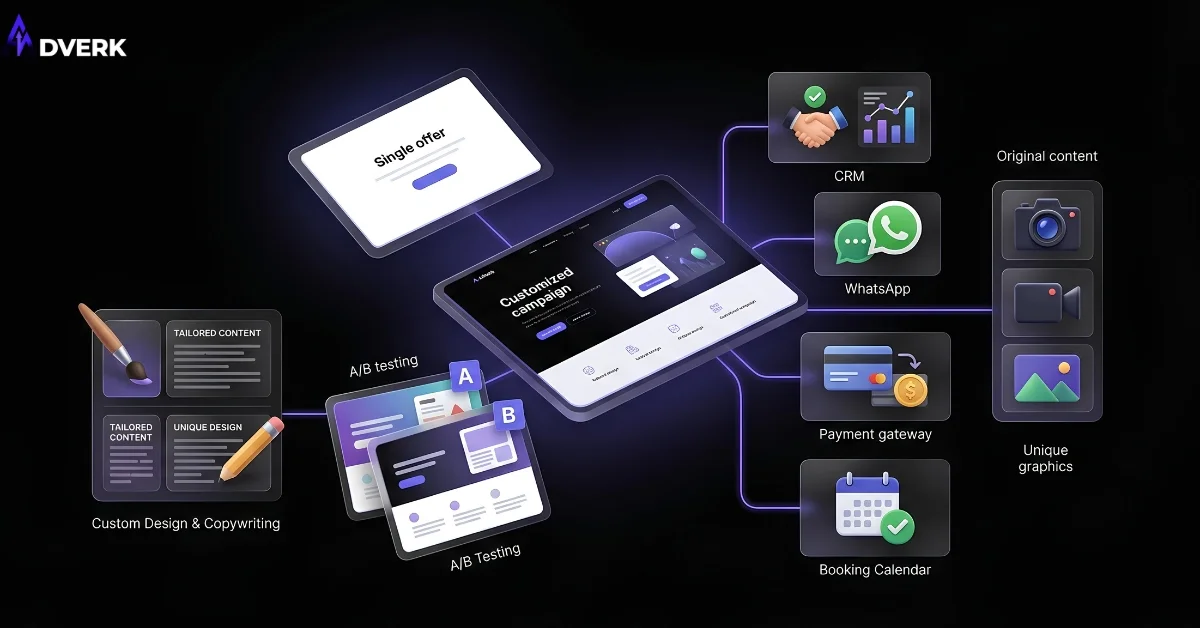
Landing page pricing depends on a few real variables rather than a single flat number: how much custom design and copywriting the page needs, whether it requires integrations (payment gateways, booking tools, CRM or WhatsApp connections), whether you need multiple versions for A/B testing, and how much of the content (copy, images, testimonials) you can provide versus what needs to be created from scratch. A simple, single-offer page with existing brand assets costs meaningfully less than a page built around a new product launch that needs original photography, copywriting, and custom interactive elements. The most accurate way to get a number for your specific campaign is a quick consultation where the scope gets defined before any pricing is quoted.
A Simple Landing Page Design Checklist
- Headline restates the exact offer from the ad or link that brought the visitor.
- One primary call to action, repeated at the top, middle, and bottom of the page.
- Navigation menu removed or minimized so there are fewer ways to leave.
- At least one trust signal (testimonial, client logo, review count) visible without scrolling.
- Form asks only for information you’ll actually use in the first follow-up.
- Page loads quickly and displays correctly on mobile before launch.
- Copy leads with the visitor’s outcome, not a list of features.
- A plan in place to review real performance data and adjust the page after launch.
Frequently Asked Questions
What’s the difference between a landing page and a website?
A website is made up of multiple connected pages designed to inform visitors, support navigation, and serve several goals at once. A landing page is a single, standalone page built around one specific offer and one action, usually with the main site navigation removed so visitors stay focused on converting.
How long should a landing page be?
There’s no fixed length — it depends on how much convincing the offer needs. A low-commitment action like signing up for a free consultation can work with a short page, while a higher-priced or less familiar offer usually needs more sections to build trust before asking for the conversion. The right length is whatever it takes to answer the visitor’s objections, not a word count target.
Do I need a separate landing page for every ad campaign?
Not always, but it helps whenever the campaigns have different messages or offers. If two campaigns are promoting the exact same offer to a similar audience, they can usually share one page. Once the offer, audience, or platform changes meaningfully, a dedicated page tends to convert noticeably better than a shared one.
Can an existing website page be turned into a landing page?
Yes, in many cases. If the page already has reasonable content and structure, the work is usually about removing distractions like navigation and unrelated links, tightening the headline and call to action, and adding trust signals — rather than rebuilding the page from scratch.
How do I know if my landing page is actually working?
Track the conversion rate (visitors who complete the action divided by total visitors), not just total traffic. A page that gets a lot of visits but very few form submissions or calls usually has a message-match, trust, or friction problem rather than a traffic problem, and that’s the first thing worth reviewing.
Should a landing page have a navigation menu at all?
Most high-converting landing pages remove or significantly simplify the navigation menu on purpose. The goal is to keep visitors focused on the one action the page is built for, and a full menu gives them an easy way to click away before converting.
A landing page is one of the fastest ways to turn ad spend or campaign traffic into actual inquiries, but only when it’s built around a single clear offer instead of trying to do everything a full website does. It’s one of the core web design services we build specifically for conversion, alongside full website layout design and UI/UX design. If you’re planning a campaign and want a page built to match it, you can book a free consultation and we’ll walk through what the page needs to convert.