


Social media marketing for a small business in Pakistan does not start with a posting schedule. It starts with a decision: what do you actually want social media to do for your business — build awareness, drive inquiries, support a launch, or make an existing audience trust you enough to buy? Once that’s clear, the platform, content, and posting cadence choices get much easier.
Most small businesses skip that step and go straight to “we need to post more.” That’s how you end up with a Facebook page that hasn’t been touched in three weeks, sitting next to an Instagram account full of product photos nobody engages with. This framework walks through the decisions that actually move the needle, in the order they need to happen.
1. Set One Goal Before You Set Up a Single Post
Pick a single primary goal for the next 90 days. Not five goals — one. Common starting points for small businesses:
- Awareness: more people in your city or niche recognize your brand
- Inquiries: more DMs, WhatsApp messages, or calls from people asking about your product or service
- Trust: people who already found you (through a referral, Google, or your website) check your social pages before deciding, and what they see needs to reassure them
Each goal points to a different content mix and a different way of measuring success. Chasing all three at once with the same three posts a week is how most small business social media plans quietly stall.
2. Go Where Your Audience Actually Is
Pakistan’s social media landscape isn’t one platform — it’s several, each doing a different job:
- Facebook still carries the broadest reach across age groups and works well for local service businesses, community-based selling, and businesses that rely on Marketplace-style discovery.
- Instagram and TikTok lead for visual and short-form video content, especially with younger and urban audiences. If your business is visual — food, fashion, design, beauty, retail — this is usually where organic reach is easiest to build.
- WhatsApp Business isn’t really a “social” platform in the traditional sense, but for Pakistani small businesses it’s often where the actual conversion happens: someone sees your Instagram post or Facebook ad, then messages you on WhatsApp to ask questions, get a quote, or place an order. Treat it as the closing step in your funnel, not an afterthought.
- LinkedIn matters if you sell to other businesses, are hiring, or want to build credibility with corporate clients and partners.
Pick two platforms to start — one primary, one supporting. Trying to run five platforms well with no dedicated marketing team is how content quality drops across all of them.
3. Build a Simple Content Plan Around a Few Pillars
You don’t need fifty content ideas. You need four or five recurring content types (pillars) you can rotate through every week, for example:
- Product or service in action (what you actually do, shown, not described)
- Customer questions answered publicly (the questions you get repeatedly in DMs or calls)
- Behind-the-scenes or process content (builds trust faster than polished-only content)
- Social proof (reviews, before/after, results — only real ones you can show)
- Offers or announcements (used sparingly, not every post)
A simple weekly rhythm across these pillars is far more sustainable than trying to come up with something completely new for every post.
4. Match Language and Timing to Your Actual Audience
Content that performs well for Pakistani audiences frequently blends English with Urdu or Roman Urdu, particularly in captions and comments — it reads as more natural and approachable than English-only copy, especially outside a strictly corporate or B2B context. Test both and watch which gets more genuine engagement (comments and shares, not just likes) from your actual audience.
Timing matters too: cultural moments like Ramadan, Eid, and major local events (including cricket season) shift both attention and buying behavior. A generic content calendar that ignores these windows misses some of the highest-attention periods of the year for Pakistani consumers.
5. Post Consistently — But Watch the Right Signals
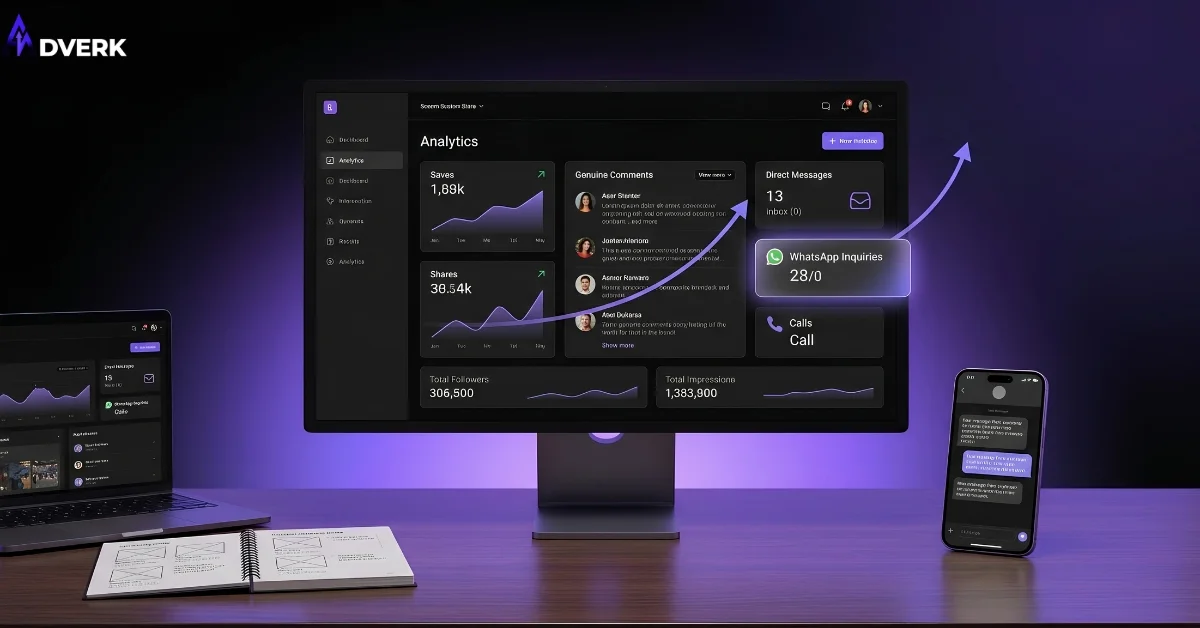
Consistency beats frequency. Three well-planned posts a week, sustained for months, will outperform a burst of daily posting that dies out after two weeks. What you’re watching for isn’t just reach or follower count — those are vanity metrics that don’t pay bills. Watch:
- Saves and shares (a strong signal the content was genuinely useful or worth passing on)
- Comments that ask real questions (a sign you’re reaching people close to a decision)
- DMs and WhatsApp messages generated directly from a post
These tell you what’s actually working far more reliably than a spike in impressions.
6. Review Monthly and Adjust
Once a month, look back at what you posted and be honest about what worked. Which pillar generated the most saves or messages? Which platform is actually producing inquiries versus just likes? Drop or scale back what isn’t working instead of posting it out of habit. Small businesses that treat their content plan as fixed rather than something to adjust monthly tend to plateau within a few months.
7. Know When DIY Reaches Its Limit
Running your own social media is entirely realistic in the early stages, especially with a clear goal and a simple content plan. The point where it usually needs outside help is when you’re getting real traction — more inquiries than you can respond to consistently, or a following that’s outgrowing what you can plan and post around a full-time job running the actual business. At that point, the value of bringing in dedicated social media management isn’t just “more posts” — it’s content planning, creative direction, and a consistent strategy behind every post instead of whatever fits into a spare hour.
It’s also worth checking whether the traffic your social content generates has somewhere good to land. If people are clicking through to a website that’s slow, outdated, or unclear about what to do next, the work you’re putting into social media is being wasted at the last step — a case where the website itself, not the social strategy, is the bottleneck.
Common Questions
How often should a small business post on social media?
There’s no fixed number that works for every business. Three to five well-planned posts a week per platform is a realistic, sustainable starting point for most small businesses — consistency matters more than volume.
Which social media platform is best for small businesses in Pakistan?
It depends on the business and audience. Facebook offers the broadest reach across age groups, Instagram and TikTok work best for visual and younger audiences, LinkedIn suits B2B, and WhatsApp Business is typically where inquiries actually convert regardless of which platform generated them.
Do I need a paid ad budget to see results from social media?
No — organic content can build awareness and trust on its own, particularly on Instagram and TikTok. Paid promotion can accelerate reach and is useful for specific goals like a launch or a time-sensitive offer, but it’s not a requirement to get started.
How do I know if my social media marketing is actually working?
Look past likes and follower counts. Track saves, shares, genuine comments, and direct inquiries (DMs, WhatsApp messages, calls) that you can trace back to your content. Those are the signals tied to actual business outcomes.
Social media marketing for a small business doesn’t require a large team or a big budget to start — it requires a clear goal, the right one or two platforms, and a content rhythm you can actually sustain. If you get to the point where managing it well is taking time away from running your business, a free consultation is a straightforward way to figure out what to hand off first.